What Questions Should I Ask Photographers?
Before you book a photographer, look past the pretty Instagram feed! From spotting "ghosted" lighting to dodging shady hidden fees, here are the real, expert questions you need to ask to protect your memories and find your perfect match.
6/29/20268 min read
What Questions Should I Ask Photographers? Getting Answers Before Making a Commitment
Planning a wedding or a massive milestone celebration comes with approximately one million decisions. But let’s be real: choosing the right photographer is right at the top of the list. Too often, people fall into a classic, super painful trap. They pick a totally inexperienced photographer simply because they are cheaper. Fast forward to the event, and there is instant regret because that photographer has absolutely no clue how to handle artificial light in low-light, nighttime, or indoor situations.
If you want to make a commitment you actually feel amazing about, you have to look past a beautifully curated Instagram feed and ask some deep, intentional questions. Let's look at the ultimate technical, logistical, and gut-check questions to ask so you can protect your memories and find a true pro.
The Ultimate Technical Litmus Test: Show Me the Full Galleries
A "best of" portfolio or a gorgeous social media grid can make almost any hobbyist look like an absolute master. The ultimate truth serum for a photographer’s actual skills is seeing multiple full galleries from real, live events. When you're interviewing people, look them in the eye (or the Zoom screen) and ask to see full galleries that show off a bunch of different, tricky lighting setups.
Look at the Hardest Rooms to Shoot
When you're scrolling through those full galleries, don't just stare at the sun-drenched, outdoor sunset portraits where the lighting is automatically perfect. Head straight for the tough stuff:
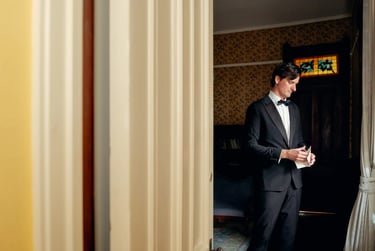
The Getting Ready Images: Roughly 70% of getting ready moments happen in tiny, cramped, and often dark hotel suites. See if those shots look clean or chaotic.
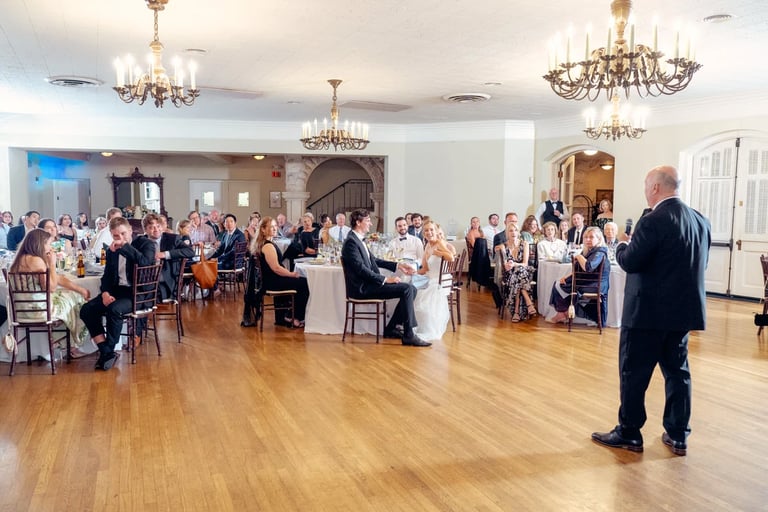
Indoor and Structured Receptions: Check out photos taken inside dimly lit ballrooms, big tents, or indoor spaces.
Nighttime and Getaway Moments: The grand exit at the end of the night is pure chaos in the dark. It takes serious skill to freeze that moment perfectly.
Spotting Good Light vs. "Ghosting"
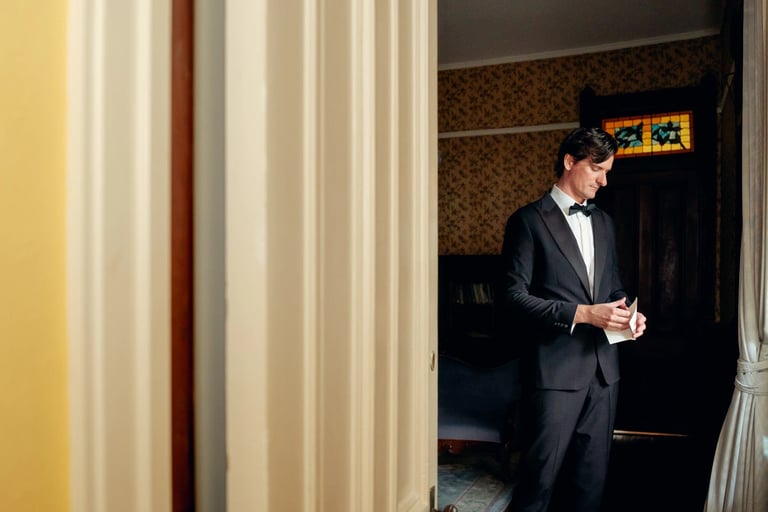
You do not need an expensive photography degree to spot a technical fail in a dark room. A true professional knows exactly how to balance highlights and shadows. In a great indoor photo, you should easily see ambient light on the background behind the couple, and the subjects themselves will be brightly lit but definitely not blown out.
On the flip side, watch out for "ghosting." This is photography lingo for when someone has no idea how to use artificial light, resulting in a subject who is stark white and washed out against a pitch-black background. Amateurs also love to crank their camera's ISO settings to extreme limits to compensate for a lack of light. The dead giveaway here is an incredibly grainy, noisy image. Scan the dark parts of their photos for heavy digital fuzz or aggressive AI editing tools trying to hide a bad shot.
The "Natural Light Photographer" Red Flag
Here is a major insider tip: be a little skeptical of vendors who heavily market themselves only as a "natural light photographer." Don't get me wrong, natural light is beautiful! But in the industry, this label is frequently used to mask the fact that a photographer simply doesn't know how to operate on-camera and off-camera flash gear. If you hire an exclusively natural light photographer for an evening wedding, they are going to be stuck shooting your reception using whatever terrible, muddy lighting happens to be in the room.
Operational Timelines: What Happens Before and After the Big Day?
Understanding a photographer’s workflow is everything when it comes to keeping your sanity intact. You want to look at timelines in two totally different phases: how fast they answer you before you book, and how fast they deliver your photos afterward.
Response Time When First Booking
A dedicated pro should have a few sample or partial galleries right there on their website. It is totally normal for a photographer to keep full galleries private to respect their past clients' privacy. However, the second you ask to see one, they should send it over immediately or within a couple of hours. Plus, if you set up an in-person or Zoom consultation, they should be totally pumped to pull up even more of their work right then and there.
Post-Wedding Delivery and AI Shortcuts
When it comes to getting your final, beautifully edited images after the big day, a normal, high-quality turnaround time is about 6 to 8 weeks. Be super wary of anyone who promises a final wedding gallery in less than 3 weeks. Creating timeless art takes time! Photographers promising lightning-fast delivery are almost always cutting major corners. They are either outsourcing your editing to an anonymous third party or relying on automated AI software to batch-edit thousands of unique images without an artist's touch.
Protecting Yourself with Legal and Team Safety Nets
It is so easy to get caught up in the excitement of booking a vendor that you completely forget to ask about the boring legal stuff. But you absolutely must know what clauses exist in the contract regarding insurance, liability, and emergencies.
The Reality of an Emergency Backup Plan
An emergency plan can feel a bit awkward to talk about, but a clear backup strategy separates a legitimate business from a hobbyist. You need to know exactly what happens if your photographer has a major medical crisis and literally cannot show up.
A real professional doesn't just promise to drop a refund in your lap and wish you luck; they have an active network of trusted peers in the local community ready to step in. I know this firsthand. Back in 2017, I actually broke my leg during an engagement session right at the start of a 6-week streak of consecutive wedding weekends. Because of a trusted network, an amazing photographer friend stepped in to help every single weekend, allowing me to join and photograph what I could while leaving the heavy lifting safely in her hands. More recently, an unscheduled surgery left me unable to heal fast enough for a wedding just 9 days later. Within 4 days of the event, my primary network helped source another incredible, trusted community photographer to take over as the primary shooter, while my sister Juli was right there as the second shooter. A professional contract must explicitly state that if there is an emergency, the photographer will do everything in their power to secure an equal replacement or give you a full refund.
Vetting the Second Shooter
Do not just assume that a "second shooter" listed in a package is an experienced professional. Many lead photographers simply hire cheap, unverified gig workers or random hobbyists off the internet a couple of weeks before an event.
Ask the photographer if they work with their second shooter consistently or if it changes from event to event. When a team stays together for years, it creates a seamless flow. My sister, Juli, has been my assistant for 6 years and has shot right alongside me as my second shooter for the last 3 years. When a team is that consistent, their shooting styles and editing choices intertwine flawlessly—the only way you can tell there are two people is because you get two awesome points of view. When looking at full galleries, ensure you specifically ask to see the second shooter's work to verify that their style blends beautifully with the lead photographer's work.
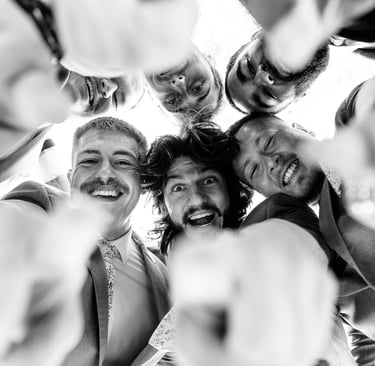
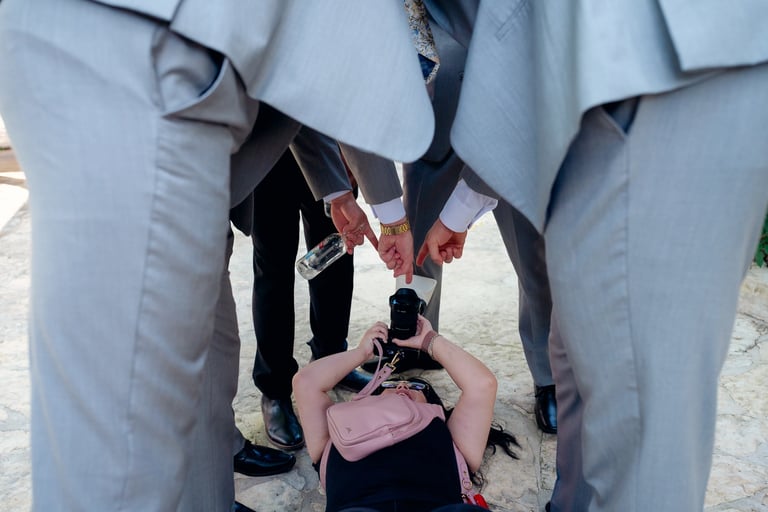
Just as an example, here is my lovely sister on the floor getting an awesome picture of the groomsmen. Everything for the pic! She is amazing!
Understanding Style: The Photography "Chameleon"
If you ask a photographer about their style, they will probably give you a generic, buzzword answer like "documentary" or "traditional." But a real wedding day is wild and dynamic, and a great photographer needs to act like a total chameleon.
Adapting Shooting Styles Throughout the Day
A single day requires a photographer to wear a ton of different creative hats:
Documentary Style: During getting ready moments and the reception party, the photographer should be a total fly on the wall, stepping back to capture raw, unscripted emotions as they naturally happen.
Traditional Style: During formal family and friend portraits, the photographer has to step up, take control of the crowd, and explicitly know how to line up, arrange, and pose people correctly so it looks amazing.
Creative Style: When photographing just the couple alone or capturing artistic details, the style should shift into a highly creative, tailored space.
Editing Style vs. Shooting Style
Make sure to separate the shooting style from the editing style. Trends like moody desaturation or heavy, sepia filters come and go, but your photos should outlive passing fads. Aim for an editing style that is true-to-life, vibrant, and timeless, making sure your memories look exactly as beautiful as they did in real life.
Unmasking Hidden Fees and Shady Pricing Contracts
Hidden costs and "gotcha" clauses can completely ruin what should be a joyful post-wedding experience. Some photographers market seemingly fabulous, cheap rates up front, but hide wild rules deep in their contracts
The Hidden Costs of Your Own Memories
Always ask upfront about travel fees, print releases, and image caps. It is a shockingly common, shady practice for photographers to hide download and printing fees, or to refuse to release any digital images at all until you pay significantly more money after the event. In those scenarios, the thousands of dollars you paid upfront only covered the cost of the photographer showing up to take the photos, not the rights to actually own them! Other professionals strictly cap their delivery packages, refusing to give you more than 500 images from your entire wedding day unless you buy an expensive upgrade.
Demanding Transparent Pricing
Having encountered these frustrating, hidden tactics myself when searching for my own wedding photographer, I made a strict promise never to subject my clients to those practices. True professionals offer transparent, clear pricing. For example, my pricing page is entirely transparent: I never charge travel fees within Central Texas, full download and print releases are automatically included for all couples, and there are absolutely no surprise fees besides standard legal sales tax (because Uncle Sam always wants his cut!). Always make sure your contract explicitly outlines every single dollar required to get the final images into your hands.
Trust Your Gut: Finding "The One"
Once you have checked every single technical, legal, financial, and logistical box, the final decision comes down to a good old-fashioned gut feeling.
Your photographer is not just another vendor on a spreadsheet; they are the person who will be standing directly by your side through almost every intimate, stressful, and joyful moment of your entire day. Because of this, there absolutely must be deep, mutual trust between you and your photographer.
You deserve to feel completely relaxed, carefree, and excited to celebrate. Look for a professional who genuinely wants to relate to you, laugh with you, and match your energy. If you can talk with them openly, share a real laugh, and feel completely at ease, then you know you have found your perfect match!